


How to Use Projects in Sugester for Agile Project Management
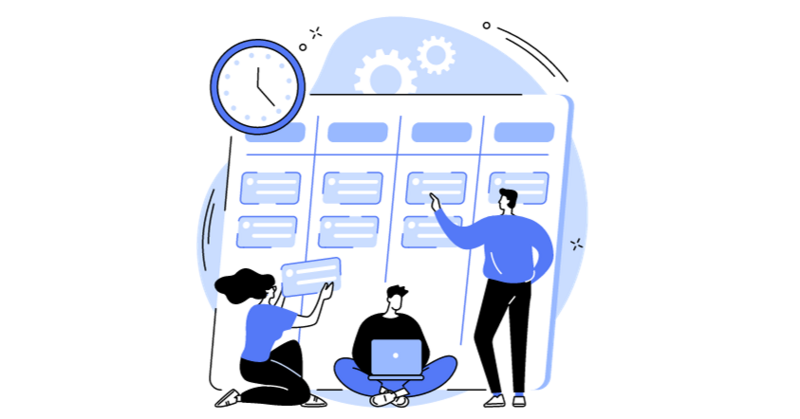
In the dynamic business environment, effective project management is key to success. The agile methodology in particular, capable of flexibly responding to change, is very popular. No wonder — in a world where the only constant is change, the agile methodology allows teams to adapt to project requirements whenever necessary. Today's article is about the agile methodology and how agile project management looks in Sugester.
What is the agile methodology?
Agile methodologies focus on a flexible approach to project execution. They assume that not everything in a project can be predicted and precisely planned. Therefore, they place greater emphasis on adapting to possible changes than on rigidly following a previously established plan.
Two of the three most popular agile methodologies are: scrum and kanban.
Scrum
Scrum is a way of working that helps a team work effectively on a project. In Scrum, important elements are:
- the team — people working together on the project,
- tasks — things to do, which are broken into small parts to be completed in a short time,
- sprints — where work is divided into short periods of time, usually 2–4 weeks (some say 1–2 weeks),
- daily meetings — during which the team discusses progress and problems,
- and review and retrospective — where after the sprint ends, the team presents what they accomplished and discusses what could be done better.
Kanban
The kanban method allows you to visualize the flow of work using a board and cards. Kanban makes it easy to visually track ongoing work and quickly identify what needs to be done and when. It is particularly effective in projects with many tasks.
Advantages and disadvantages of the agile methodology
The agile methodology, like any other, has its advantages and disadvantages. We will list only the main ones.
When working in the agile method:
- You deliver a working part of the product or software to the client faster.
- You adapt more easily to changing client requirements and are more flexible.
- You focus on active collaboration between the team and the client, which makes it easier to understand their requirements and achieve the expected goal — sometimes through different solutions than those initially chosen.
- You increase client satisfaction by regularly delivering valuable product or service elements.
- You have better control over the project, which means you detect and resolve problems faster.
- You test your product/service at an early stage, which helps detect bugs and shortcomings before the client receives the final version.
- If your project is less complex, it's easier to deliver the product.
Disadvantages of the agile methodology
- Variable costs — the client should be aware that changes made during project execution affect the delivery time and production costs. If the client forgets this, they may feel deceived when the cost of service delivery grows.
- You don't have a rigid, long-term plan, which may be a problem for some organizations.
- You need client engagement. If the client doesn't have time or is less involved, collaboration may be sluggish.
- You don't have a clearly defined "finished" product. In the agile methodology, the concept of a "finished" product can be subjective and interpreted differently by different team members.
- You focus on short-term goals, which carries the risk of missing or ignoring long-term project goals.
- You require yourself and the team to continuously adapt to changes.
The agile methodology is not suitable for all projects — especially those with very strictly defined requirements or long-term projects. In such cases, a more traditional approach may work better.
How Sugester supports the agile methodology
Now that you know what the agile methodology is and what its main principles are, we want to show you which tools and features in Sugester will support you in working with the agile technique, if that's what you choose for managing your projects.
Creating tasks and sprint planning in Sugester
In the agile methodology, creating and managing tasks are crucial for effective project management.
Creating tasks (Backlog)
Typically at the beginning, you gather requirements from the client and the team and create User Stories. In the agile methodology, User Stories are often used — they are brief descriptions of features from the user's perspective.
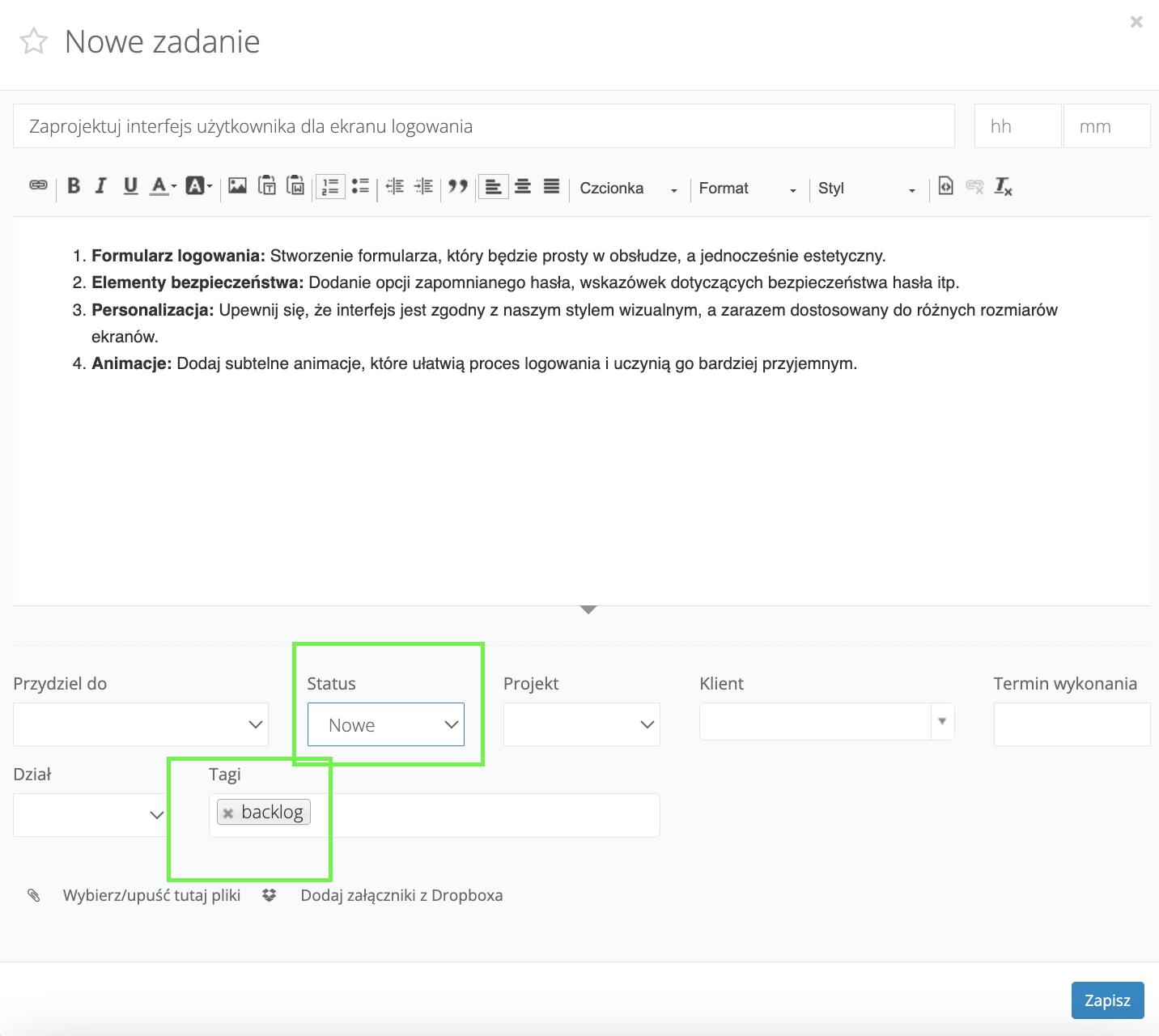
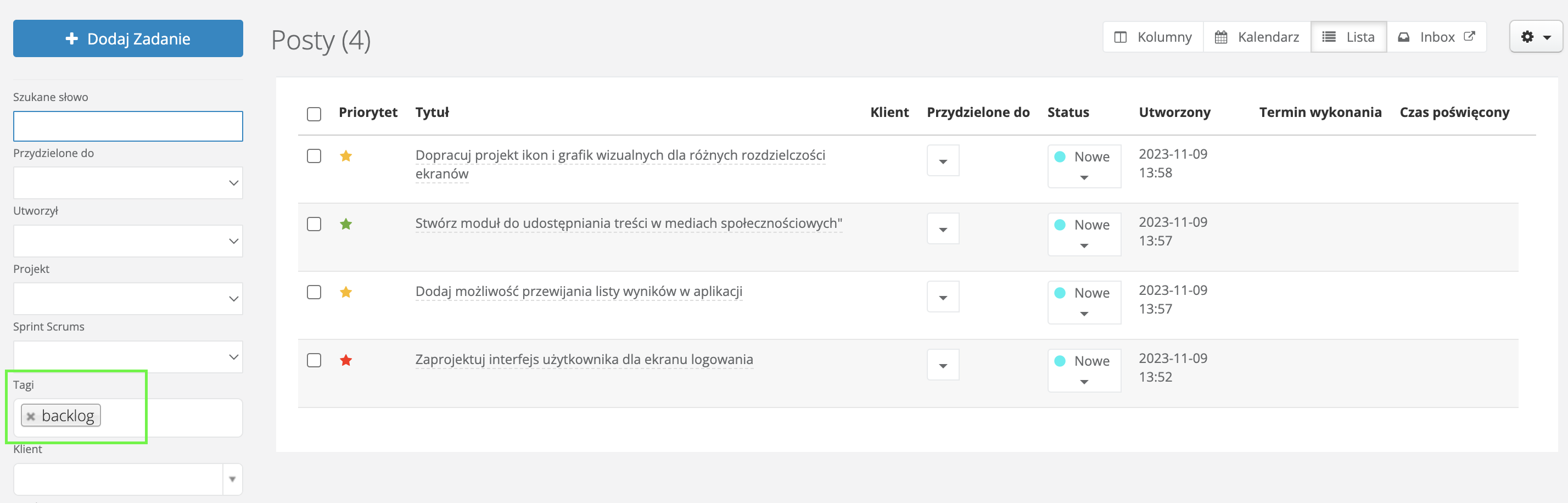
All client requirements and user stories can be recorded in Sugester as new tasks. In the task body, you can give a more detailed description of the feature, mark it with a preliminary status and, for example, a Tag "backlog". This way, you create a backlog in Sugester — a list of tasks, ideas, and suggestions that should be realized during the project.

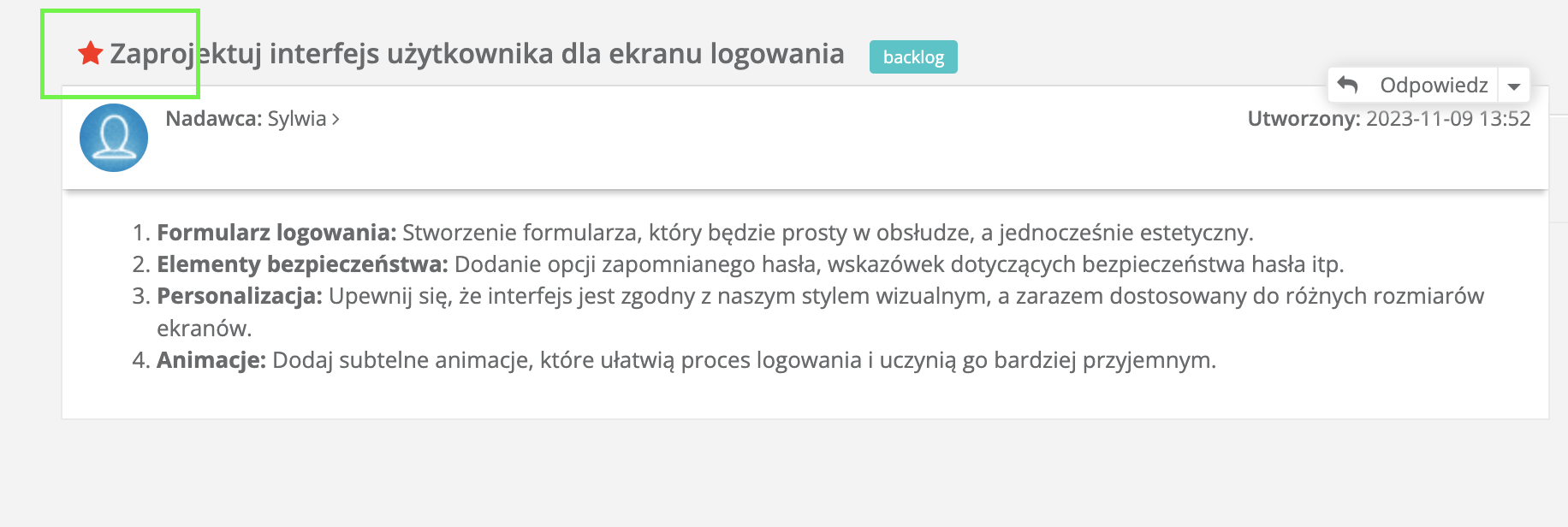
Finally, all gathered tasks are prioritized in the Product Backlog according to their value for the client or product. Priorities in Sugester are assigned by giving each task an appropriate star color.
Sprint planning
Before each sprint begins, the team selects tasks from the Product Backlog to work on over the next week or two.
The most important thing is to plan the work well, estimate how much time will be needed for individual tasks, and assess how complex they are.
In Sugester, a special tab in Projects → Scrum Sprints is used for sprint planning.
If you want to start your first sprint, you first need to:
- Go to the Projects tab in the top menu → Scrum Sprints
- Click the blue +Add button in the top right corner
- Enter the sprint name, fill in the description (optional), and the start and end dates
- By expanding More options, you can also assign a department (team) that will work on this sprint and select a Parent project (the parent project can be, for example, a Mobile App for a client)
After creating the sprint, you need to assign tasks from the Backlog to the current sprint. To do this, assuming you have a backlog created, simply go to the Tasks tab and search for all tasks with the "backlog" tag. You can narrow the search results to tasks with that tag and a specific status, if you previously assigned one.
Completing tasks in a sprint
During the sprint, each team member works on the tasks assigned to them.
By changing task statuses, the person overseeing the process — for example the Product Manager — can check at any point during the sprint what stage each task is at.
In the agile methodology, brief daily meetings are also practiced, during which the team discusses progress, plans for the next day, and any obstacles. However, this is not a mandatory requirement.
Monitoring work progress
During the sprint, as we already mentioned, the team tracks work progress.
In Sugester, we have several tools for this:
Kanban board
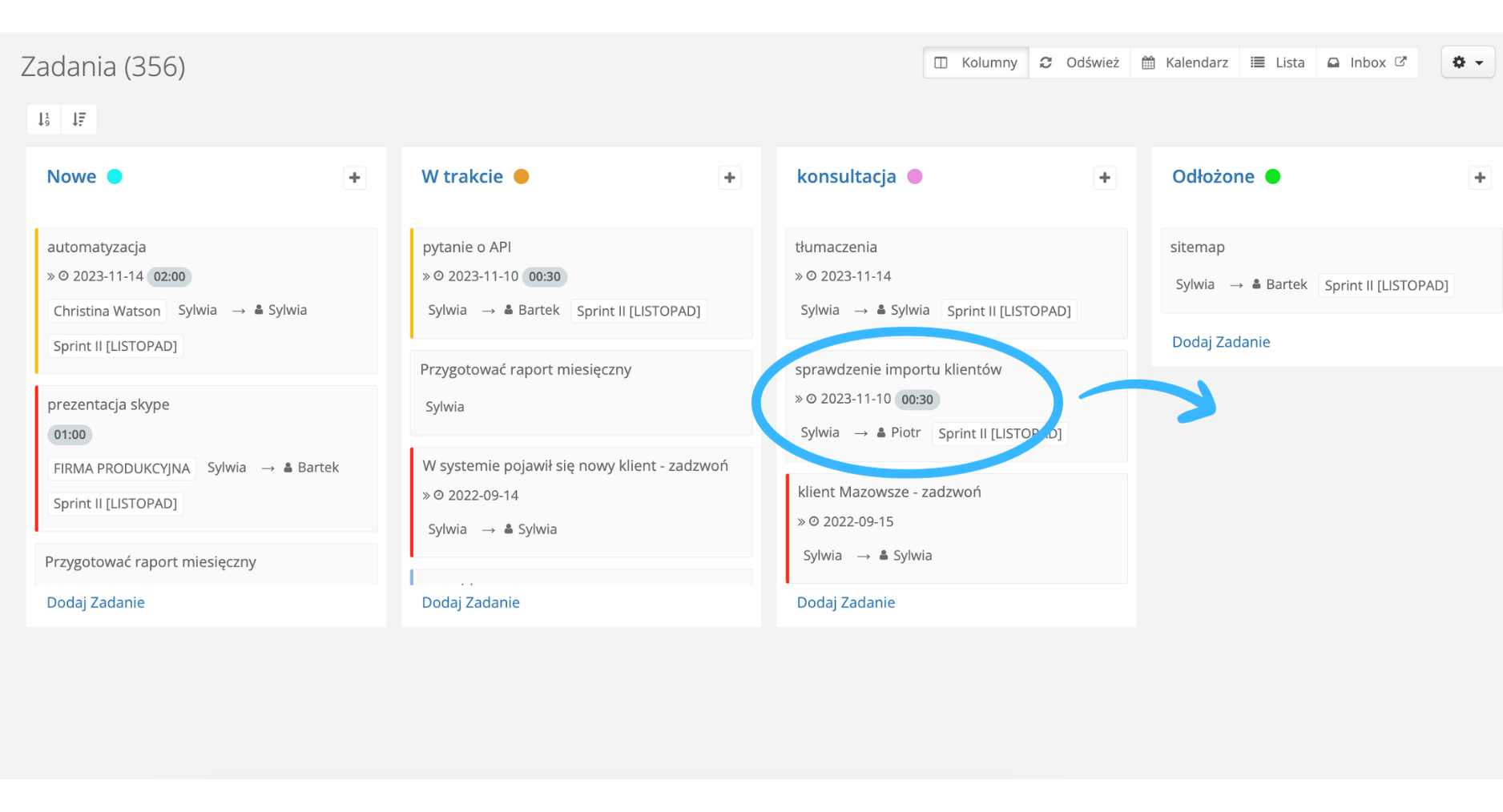
It enables visualizing work on the same principle as sticky notes that can be moved between sections. On the board, tasks are the cards and the sections are columns representing individual stages of task execution.
In Sugester, the columns on the kanban board are task statuses. Therefore, when managing tasks in a project, remember to change the status each time a task moves to the next stage.
You can change the status by entering the task's edit view or simply by dragging the task tile to the next column.
 This way you can more effectively monitor the progress of work, more easily determine how many tasks are at each stage, and locate the so-called bottleneck.
Time tracking
In Sugester, you can estimate the time needed to complete a specific task in the project. Work time can be approximate and defined based on previous similar tasks, or measured precisely using the time counter.
When using the agile methodology and scrums in Sugester, time is visible in the sprint view, next to each user, alongside pie charts. The system displays the estimated time and the actual time the user spent on the task (by clicking start–stop).
The exact work time spent on a given project or set of tasks can also be checked in our timesheet report. Simply enter the date range or select the project for which you want to generate the report.
See also: Timesheet report in our knowledge base.
Pie charts in the sprint overview
When entering a sprint in Sugester, next to each user is a pie chart that shows as a percentage the amount of work remaining to be completed in a given time. There are separate charts for each team member and one shared chart for all tasks in the sprint.
This means that a single glance is enough for the Product Manager to know whether the work is on track in the middle of the week or whether there is a risk that some tasks will carry over to the next week.
Team collaboration and client communication in agile project management
Team communication in the project
Team collaboration when running projects in Sugester, regardless of the chosen methodology, takes place mainly within the tasks assigned to the project. Each project team member can add their replies or comments within a task. This ensures that important ideas or notes for the project are recorded in the system.
Communication through tasks is systematic — you can clearly see which user left a comment and when. Adding a comment takes a moment, just click "Reply". Thanks to this, clarifying details takes much less time than doing so by phone or email.
Communication through tasks minimizes the risk of delays in task execution, missing essential information, or communication misunderstandings. And adding screenshots and attachments makes it easier to understand the goal and stages of task execution.
Communication with the client
For communication with the client, traditional email is the best solution. When handling mail in Sugester, every message you receive from a client is automatically saved in CRM on that client's card. Additionally, such an email can also be linked to a specific project. You can do this from the inbox by expanding the arrow next to the "project" label on the email list.
See also: Why redirect your email to Sugester?
If you use the agile methodology for project management in your company, or are considering implementing it, you can successfully use the Projects module and Scrum Sprints in Sugester as a tool to support this technique.
From creating tasks in the backlog, through sprint planning, to effective task execution and communication with the client and team — Sugester offers many possibilities.
This post is the first part of an article about project management in Sugester. In the next article, we will show how to use the Projects module in the waterfall project management model.